INFORMATION
FROM THE BEGINNING IT WAS INFORMATION
###############################
About 14 or 15 years ago, while having breakfast with my wife on one of our days off, it must have been a Wednesday or Thursday, since we worked from Friday to Tuesday at Dandenong Hospital in Melbourne. It must have been autumn because looking out the window across from our table, we saw a medium-sized peach tree, completely bare of leaves and looking very withered, and damp from a morning drizzle. I wondered aloud, "Has it dried up?”. My wife replied, "wait until spring, and you'll have your answer."
Months passed, and again during one of our usual breakfasts on our days off, my wife and I remembered the almost dead tree we had seen months before. Looking through the window, our eyes lingered in admiration on the peach tree, only this time it looked beautiful, laden with leaves and blossoms.
What happened to our peach tree, and what also happens to humanity, fauna, and flora on this planet, is that the information contained within all bodies, at the precise moment, triggered the beginning of an unstoppable process, culminating in leaves, flowers, and then fruit in the case of our little tree. This also happens in the organisms of all beings until they reach adulthood, repeating itself in some cases during different seasons. In this simple event, we can see that without (divine) information, nothing can function. Of course, good communication between the Sender and the receiver is crucial.
GOD IS THE SENDER AND ALL THAT IS MADE IS THE RECEIVER.
{from Werner Gitt}
###############################
To be able to think about and then discuss the world we live in, the place we inhabit, and the surface of the earth we walk on, we should first meditate on where everything around us comes from, everything we know, and therefore, everything we do in our daily lives. The only logical answer resulting from our meditation should be…information.
Information is what allows the world (Universe) to exist. We should consider some questions about information: What is it? How does it appear? What is its function? How is it transmitted? Where does it originate? Where does the information found in living organisms come from? etc. Information confronts us from all sides: newspapers, magazines, TV, etc., providing us with daily knowledge. Processed information systems are found everywhere, in all kinds of computers and even in automobiles. We should also note that the activities of all living organisms are controlled by compressed information programs. Because information is required for all life processes, we can say with complete certainty that…information is crucial in our lives. We try to explain life processes in physical or chemical terms, but we fail.
Information is a fundamental entity…currently, manual labor has been replaced by technological machines that assist humans in their work, even mental tasks. Information is extremely important for information theories, communication techniques, and is also fundamental in sciences such as cybernetics, linguistics, biology, history, and theology. For this reason, scientists believe that information is the third fundamental element, alongside matter and energy.
To understand, speak, or write about the term "information," it is necessary to have a vast amount of knowledge to navigate the immense range of possible avenues for examining all aspects related to information.
THE LANGUAGE OF GOD.
As a result of the most awesome scientific discovery of the last century /the 1953 discovery of the double-helix structure of the genetic code (DNA) by Professors James Watson and Francis Crick / we have now a very clear information-filled message that is so staggering in its complexity that it cannot possible have been produced without a supernatural intelligence.
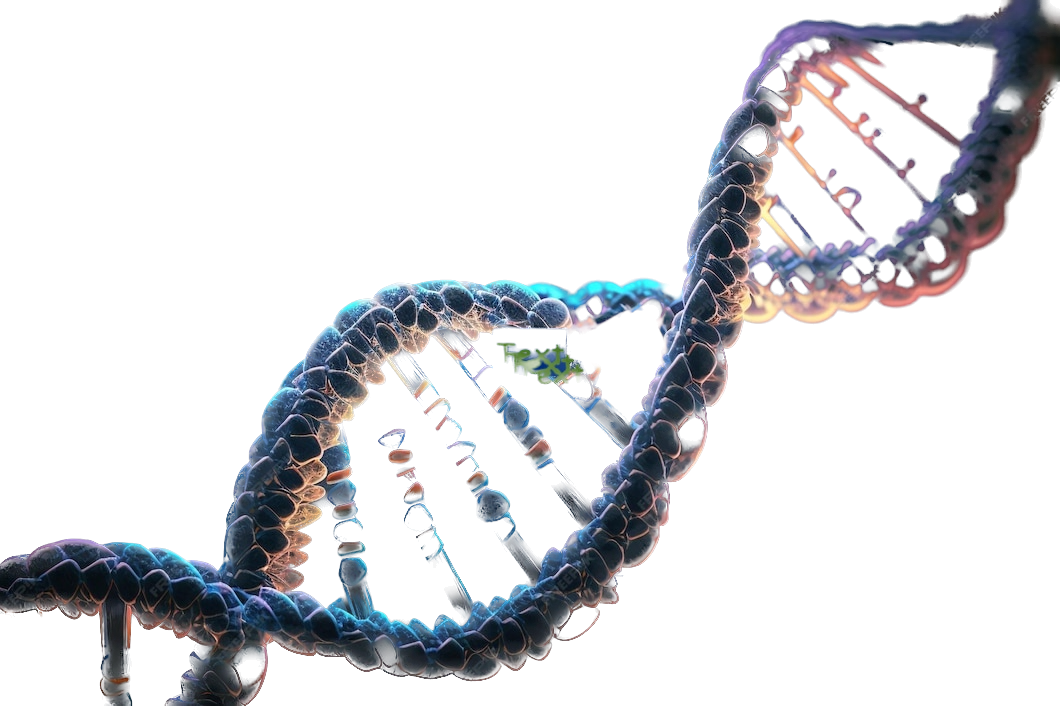
DNA is a double helix formed by base pairs attached to a sugar-phosphate backbone.
WHAT IS DNA ?
DNA, or deoxyribonucleic acid, is the hereditary material in humans and almost all other organisms. Nearly every cell in a person’s body has the same DNA. Most DNA is located in the cell nucleus (where it is called nuclear DNA), but a small amount of DNA can also be found in the mitochondria (where it is called mitochondrial DNA or mtDNA). Mitochondria are structures within cells that convert the energy from food into a form that cells can use.
The information in DNA is stored as a code made up of four chemical bases: adenine (A), guanine (G), cytosi(C), and thymine (T). Human DNA consists of about 3 billion bases, and more than 99 percent of those bases are the same in all people. The order, or sequence, of these bases determines the information available for building and maintaining an organism, similar to the way in which letters of the alphabet appear in a certain order to form words and sentences.
DNA bases pair up with each other, A with T and C with G, to form units called base pairs. Each base is also attached to a sugar molecule and a phosphate molecule. Together, a base, sugar, and phosphate are called a nucleotide. Nucleotides are arranged in two long strands that form a spiral called a double helix. The structure of the double helix is somewhat like a ladder, with the base pairs forming the ladder’s rungs and the sugar and phosphate molecules forming the vertical sidepieces of the ladder.
An important property of DNA is that it can replicate, or make copies of itself. Each strand of DNA in the double helix can serve as a pattern for duplicating the sequence of bases. This is critical when cells divide because each new cell needs to have an exact copy of the DNA present in the old cell.
Deoxyribonucleic acid (DNA) is a molecule that contains the biological instructions that make each species unique. DNA, along with the instructions it contains, is passed from adult organisms to their offspring during reproduction.
WHERE IS DNA FOUND ?
In organisms called eukaryotes, DNA is found inside a special area of the cell called the nucleus. Because the cell is very small, and because organisms have many DNA molecules per cell, each DNA molecule must be tightly packaged. This packaged form of the DNA is called a chromosome.
During DNA replication, DNA unwinds so it can be copied. At other times in the cell cycle, DNA also unwinds so that its instructions can be used to make proteins and for other biological processes. But during cell division, DNA is in its compact chromosome form to enable transfer to new cells.
Researchers refer to DNA found in the cell's nucleus as nuclear DNA. An organism's complete set of nuclear DNA is called its genome.
Besides the DNA located in the nucleus, humans and other complex organisms also have a small amount of DNA in cell structures known as mitochondria. Mitochondria generate the energy the cell needs to function properly.
In sexual reproduction, organisms inherit half of their nuclear DNA from the male parent and half from the female parent. However, organisms inherit all of their mitochondrial DNA from the female parent. This occurs because only egg cells, and not sperm cells, keep their mitochondria during fertilization.
WHAT IS DNA MADE OF ?
DNA is made of chemical building blocks called nucleotides. These building blocks are made of three parts: a phosphate group, a sugar group and one of four types of nitrogen bases. To form a strand of DNA, nucleotides are linked into chains, with the phosphate and sugar groups alternating.
The four types of nitrogen bases found in nucleotides are: adenine (A), thymine (T), guanine (G) and cytosine (C). The order, or sequence, of these bases determines what biological instructions are contained in a strand of DNA. For example, the sequence ATCGTT might instruct for blue eyes, while ATCGCT might instruct for brown.
The complete DNA instruction book, or genome, for a human contains about 3 billion bases and about 20,000 genes on 23 pairs of chromosomes.
WHAT DOES DNA DO ?
DNA contains the instructions needed for an organism to develop, survive and reproduce. To carry out these functions, DNA sequences must be converted into messages that can be used to produce proteins, which are the complex molecules that do most of the work in our bodies.
Each DNA sequence that contains instructions to make a protein is known as a gene. The size of a gene may vary greatly, ranging from about 1,000 bases to 1 million bases in humans. Genes only make up about 1 percent of the DNA sequence. DNA sequences outside this 1 percent are involved in regulating when, how and how much of a protein is made.
HOW ARE DNA SEQUENCES USED TO MAKE PROTEINS ?
DNA's instructions are used to make proteins in a two-step process. First, enzymes read the information in a DNA molecule and transcribe it into an intermediary molecule called messenger ribonucleic acid, or mRNA.
Next, the information contained in the mRNA molecule is translated into the "language" of amino acids, which are the building blocks of proteins. This language tells the cell's protein-making machinery the precise order in which to link the amino acids to produce a specific protein. This is a major task because there are 20 types of amino acids, which can be placed in many different orders to form a wide variety of proteins.
WHAT IS THE DNA DOUBLE HELIX ?
Scientist use the term "double helix" to describe DNA's winding, two-stranded chemical structure. This shape - which looks much like a twisted ladder - gives DNA the power to pass along biological instructions with great precision.
To understand DNA's double helix from a chemical standpoint, picture the sides of the ladder as strands of alternating sugar and phosphate groups - strands that run in opposite directions. Each "rung" of the ladder is made up of two nitrogen bases, paired together by hydrogen bonds.
Because of the highly specific nature of this type of chemical pairing, base A always pairs with base T, and likewise C with G. So, if you know the sequence of the bases on one strand of a DNA double helix, it is a simple matter to figure out the sequence of bases on the other strand.
DNA's unique structure enables the molecule to copy itself during cell division. When a cell prepares to divide, the DNA helix splits down the middle and becomes two single strands. These single strands serve as templates for building two new, double-stranded DNA molecules - each a replica of the original DNA molecule. In this process, an A base is added wherever there is a T, a C where there is a G, and so on until all of the bases once again have partners.
In addition, when proteins are being made, the double helix unwinds to allow a single strand of DNA to serve as a template. This template strand is then transcribed into mRNA, which is a molecule that conveys vital instructions to the cell's protein-making machinery.
WHO DISCOVERED DNA ?
The Swiss biochemist Frederich Miescher first observed DNA in the late 1800s. But nearly a century passed from that discovery until researchers unraveled the structure of the DNA molecule and realized its central importance to biology.
For many years, scientists debated which molecule carried life's biological instructions. Most thought that DNA was too simple a molecule to play such a critical role. Instead, they argued that proteins were more likely to carry out this vital function because of their greater complexity and wider variety of forms.
The importance of DNA became clear in 1953 thanks to the work of James Watson*, Francis Crick, Maurice Wilkins and Rosalind Franklin. By studying X-ray diffraction patterns and building models, the scientists figured out the double helix structure of DNA - a structure that enables it to carry biological information from one generation to the next. / Britannica /
HUMAN GENOME PROYECT (HGP)
The Human Genome Project (HGP) was an international scientific research project with the goal of determining the base pairs that make up human DNA, and of identifying, mapping and sequencing all of the genes of the human genome from both a physical and a functional standpoint. It started in 1990 and was completed in 2003. It was the world's largest collaborative biological project. Planning for the project began in 1984 by the US government, and it officially launched in 1990. It was declared complete on 14 April 2003, and included about 92% of the genome.
Level "complete genome" was achieved in May 2021, with only 0.3% of the bases covered by potential issues.The full gapless sequence containing 22 autosomes and the X chromosome was published in January 2022, making it the first fully sequenced human genome.
The full sequence of the Y chromosome was only published in August 2023 due to challenges with sequencing and assembling, caused by its highly repetitive nature.
Former NIH Director Francis Collins, M.D., Ph.D. led the Human Genome Project through most of its 13-year progression and continues to push the limits of genetics today. He served as director of the National Institutes of Health under three U.S. presidents and publicly navigated the chaos of COVID-19.
But perhaps most strikingly, he’s a devout Christian whose faith has only deepened through decades of scientific discovery.In his new book, “The Road to Wisdom”, Collins unpacks the messy, beautiful intersection of faith and science. In an interview He reflected on how exploring the intricacies of the natural world has strengthened his belief in God rather than undermining it. “For me, science isn’t a threat to faith,” he says. “It’s a pathway to worship.”Collins wasn’t always a believer. He grew up in an agnostic household and only began wrestling with faith in his late 20s while working as a medical student. “I was confronted with life and death every day,” he recalls. “I started asking questions science couldn’t answer. Why is there suffering? Is there a God? Why am I here?”
His search for meaning led him to read C.S. Lewis’ Mere Christianity, which helped him see faith and reason as partners rather than enemies. “It opened my eyes to the idea that belief in God wasn’t just wishful thinking but a rational response to the evidence of morality and creation,” he says. Far from diminishing his faith, Collins’ work in genetics and medical research has only amplified it.
“When you discover something about creation that wasn’t known before, it’s a little glimpse of God’s mind,” he says. “It makes the moment even more thrilling.” One of those moments came during the Human Genome Project. Mapping the entire human DNA sequence felt to Collins like reading “the language of God.” The elegance and complexity of the genetic code, he explains, points not to randomness but to intentionality. “It’s like uncovering a blueprint that was written long before we existed,” he says. “How can you not be in awe?” Collins sees no contradiction in being both a scientist and a person of faith.
In fact, he believes that studying the natural world is one of the most powerful ways to encounter the divine. “Science is about uncovering the truth,” he says. “And if God is real, then seeking truth will only bring you closer to Him.” “When you discover something about creation that wasn’t known before, it’s a little glimpse of God’s mind,” he says. ( RELEVANT )/Emily Brown/- 26/02/25
APRIL 25 / DNA DAY
Codes are big in today’s world: QR codes, barcodes, computer codes, cell phone codes, and more. Specific information is needed to identify, diagnose, and inform. DNA is the code for life: microbes, plants, parasites, animals, and man. DNA Day is April 25 because it was this day in history (April 25, 1953) when James Watson and Francis Crick described DNA as the double helix and the code for life. Although we consider DNA the genetic blueprint for life, it has only been known for 80 years.
On February 1, 1944, Oswald Avery, Colin MacLeod, and Maclyn McCarty wrote a revolutionary paper about DNA as the transforming principle in Streptococcus pneumoniae, changing from harmless to pathogenic. Their fundamental discovery that DNA is the genetic material would eventually lead Watson and Crick to publish their landmark paper on the structure of DNA. This transformational discovery would eventually lead to biotechnology, an awesome skill. Credit should go to operational science discoveries by man, but greater glory to God who created DNA.
Watson and Crick acknowledged that without Avery’s lab and the Rosalind Franklin lab, they would not (80 years ago) have studied DNA (Watson 1968, 2012). Today, we use DNA to diagnose disease, discern ancestry, understand the genesis of germs, and use in biotechnology products. DNA codes are very informative. They also provide evidence of God’s wisdom and craft. DNA is, in a way, the signature of God. It is simple in code (just four letters), complex in expression (genome), beautiful in embroidery form (histones), and majestic in expression (epigenetics). The information is used in microbes and man alike, so we can also better understand the genesis of germs. Mutations since the curse (Genesis 3) cause a loss of the original code and information, and DNA helps us understand the origin of many pathogens and parasites, but we can also use DNA which uses PCR codes to identify pathogens and parasites for the diagnosis of infectious diseases. {Dr. Alan L. Gillen, April 25, 2024-Answers in Depth} <
DNA, RECORD OF HUMAN INFORMATION
Dr. Yeshayahu Rubinstein, an Israeli scientist, made an intriguing discovery about DNA. He found that the sulfur bonds between the base pairs of genetic material follow a repeating pattern: 10, 5, 6, 5, which correspond to the numeric value of the Hebrew letters Yod-Hey-Vav-Hey, the name of the Creator. From this, he asserts that God has placed His signature within our DNA.
Indeed, the relationship between all aspects of our DNA manifests within a matrix that we can call “The Name of the Creator.” Dr. Rubinstein has uncovered a fundamental structure embedded in nature, which aligns with the pattern of Yod-Hey-Vav-Hey. But this relationship extends beyond DNA—it exists in everything. Sometimes we can perceive, study, and document it, and other times we cannot, but it is always present because it is a fundamental property of nature.
DNA is the record of human information that is located in our cells. Everything we are is built from protein structures, which in Kabbalah correspond to what we call “the three lines.” They form a double helix, connected by bridges, just as in Kabbalistic concepts of balance and interconnection.
This understanding has existed in the wisdom of Kabbalah for 5,000 to 6,000 years, if not more. But the question is, who knew about it before, and in what way?
How can we, in our physical, mental, emotional, and spiritual development, not break this spiral but instead strengthen it? The key is connection with the Creator, i.e., with the force of love, bestowal, and connection that created everything. By doing so, we restore broken connections within us. We need to reach a level where we can receive from the Creator that original force that corrects our DNA, restoring the balance in nature. In Kabbalah this is called the attainment of “the middle line.
Understanding that the Creator’s code is written in our very structure is indeed helpful. Everything in us consists of these codes: our cells, organs, and entire being. The Creator’s imprint is within us, forming the record of how we were created by an upper force, a higher program.
However, when we fail to resemble the Creator in a certain way, the bridge within DNA breaks. This disconnection causes problems, illnesses, and even death.
What is the Creator’s function within human DNA? The Creator’s role is to ensure balance. DNA’s two parallel protein systems connected by bridges are like the rungs of a ladder. While this is a simplified description, the underlying principle remains that all elements of nature must enter into a harmonious balance, piecing together into an absolutely altruistic interaction. When we achieve such balance, the correct signal is transmitted between the two strands, ensuring optimal functioning and life.
How, then, can we resemble the Creator? The answer is that we must want to resemble the Creator. Our desire reshapes our internal structure. When we actively choose to improve ourselves, i.e., to develop an attitude of love, bestowal, and positive connection with others similar to how the Creator relates to us, our DNA adapts, our spiral winds in such a direction, and we then interact harmoniously with others.
THE CREATOR’S BLUEPRINT OF LIFE
The Sheer number of Professors and Doctors who have studied and written about DNA makes it difficult to consider them all…
Dr. Michael Behe, Christian Biochemist, tell us that “ An irreducibly complex system cannot be built step by step; it must be fully formed or it doesn’t work.”
- We can mention The bacterial flagellum, a microscopic rotary engine with 40 protein parts , self-assembling like a nano tech motor.
- Also, the blood clotting cascade, a complex chain reaction that stop bleeding. Removing one protein means death.
- And the ATP synthase, the enzyme that powers your cells. It spins like a turbine, converting food into energy. Each of the points above demolishes the idea of a blind mutation and screams “DESIGN” to us.
Dr. Francis Collins, called DNA “the language of God,” because “Science reveals that the universe is exquisitely tuned for life. DNA is like a script — a coded message that reflects a Mind.” Every strand of DNA is packed whit data, commands, logic gates, and error correction, pointing directly to intelligent and purposeful authorship.
Dr. Hugh Ross, Christian Astrophysicist, has catered over 150 life permitting factors that must all be in place simultaneously We have to agree that this is full of “ intention” and has nothing to do with chance or luck. “ How many are your works, O' JHVH. .All of them in wisdom have You made…” ( Psalm 104:24 Interlinear Bible Hebrew / English )
Finally, DNA is a crafted chemical composed of a five-carbon sugar (deoxyribose), phosphate, and four nitrogen-containing, information bases. The two sides of the ladder are made up of alternating sugar and phosphate molecules, and the steps of the ladder are the nitrogenous bases (often simply called bases.} These elegant but simple codes are based on the Creator’s blueprint of life and contain vast amounts of information.
under construction/p